



Early childhood education is often misunderstood, especially by parents who picture preschool as a room filled with toys, finger paint, and enthusiastic chaos. Yet this “chaos” is where the deepest cognitive and emotional development happens. Before we dive into why, explore the world of early learning at The Empire Publishers a space where books, resources, and educational insights illuminate the science behind preschool growth.
Within the first few minutes of observing a preschool classroom, an adult might see blocks scattered across the floor, children negotiating who gets to be the dragon in pretend play, and a dramatic kitchen setup buzzing with culinary imagination. Underneath this colorful disorder lies the core of play-based learning, the primary catalyst behind early childhood development.
Play-Based Learning as the Engine of Early Childhood Education
When a preschooler is asked, “What did you do today?” the answer is often a simple “Play.”
But behind that play is a sophisticated learning system disguised as fun.
Children learn best through experience, movement, exploration, and imagination. Research from Harvard’s Center on the Developing Child highlights how early play strengthens neural pathways, builds executive functioning, and fosters social-emotional growth. (https://developingchild.harvard.edu/)
In the preschool environment:
- Stacking blocks builds math foundations.
- Rolling cars introduces physics.
- Pretend restaurants build language, planning, and teamwork.
- Dramatic play supports emotional intelligence and communication.
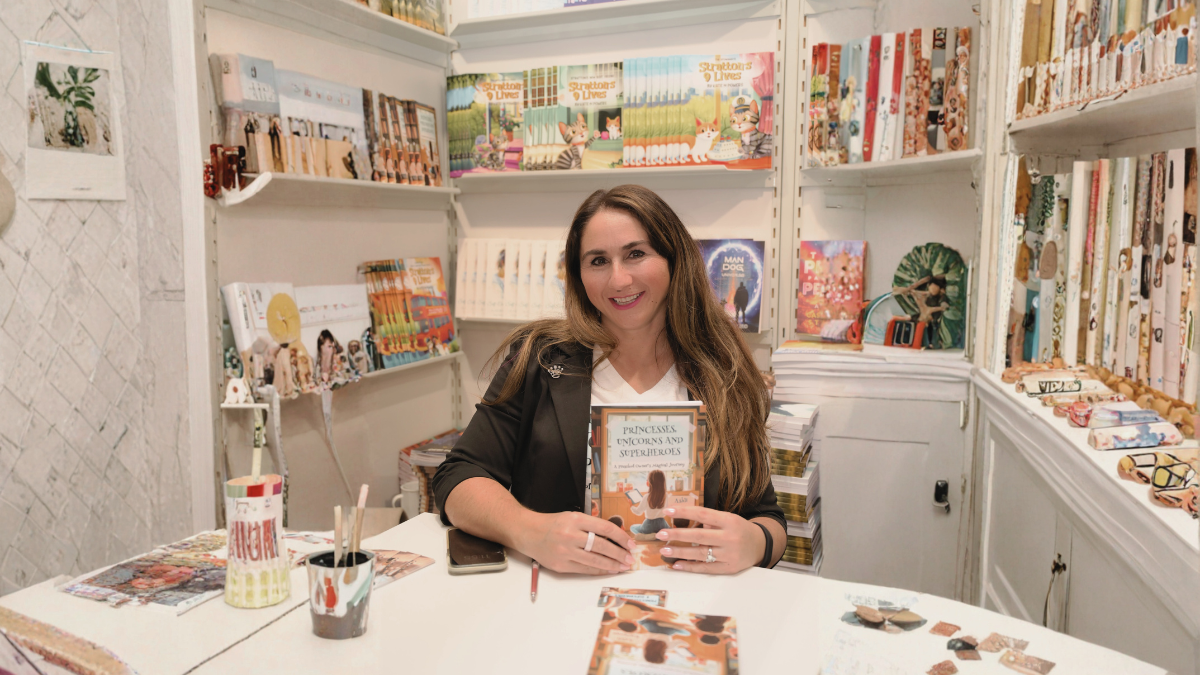
The manuscript’s author, Ashli Kamaran, beautifully recalls a mother who questioned why the school didn’t use more worksheets. Instead of explaining, Ashli invited her to observe her daughter in the pretend restaurant area, writing menus, asking questions, and problem-solving in real time.
That moment said everything:
Worksheets build compliance. Play builds thinkers.
Why Preschool Development Thrives Through Imagination and Discovery
Preschool is where curiosity becomes intelligence. Through play, children strengthen:
- Creativity
- Problem-solving
- Emotional regulation
- Critical thinking
- Early literacy
- Social negotiation
The science is clear, playful learning produces deeper, longer-lasting understanding than passive instruction. (https://www.naeyc.org/resources/topics/play)
A simple dramatic play setup becomes a writing laboratory, a math center, a negotiation hub, and a confidence-builder. Even scribbles on paper are early writing behaviors, signaling cognitive growth.
The Hidden Cognitive Power Behind Preschool Creativity
What adults see:
A child swirling paint across a page.
What teachers see:
Symbolic thinking, color recognition, emotional expression, and storytelling.
Kamaran shares stories that illustrate this magic like the mother who saw a “beach trip” in her child’s painting, only to learn it was a T-Rex eating a banana. Children communicate their internal world through art long before they master language.
Research supports this: art and sensory play activate brain regions tied to decision-making, memory, and emotional regulation. (https://www.child-encyclopedia.com/play/according-experts)
When children paint, build, pretend, or explore, they’re building skills no workbook can replicate.
Conclusion: Why Play-Based Learning Deserves Protection
The final message is simple:
Play-based learning is not optional, it is essential.
In the last 100 words of this article, it’s important to reinforce the value of play-based learning for SEO and narrative emphasis. The preschool years are more than small classrooms and tiny chairs. They are the foundation of emotional intelligence, creativity, and cognitive growth. As Ashli Kamaran’s stories remind us, the joyful mess of early childhood is where lifelong learning begins. Protecting children’s right to play means protecting their ability to think, imagine, and thrive. And that makes play the most powerful teacher of all.