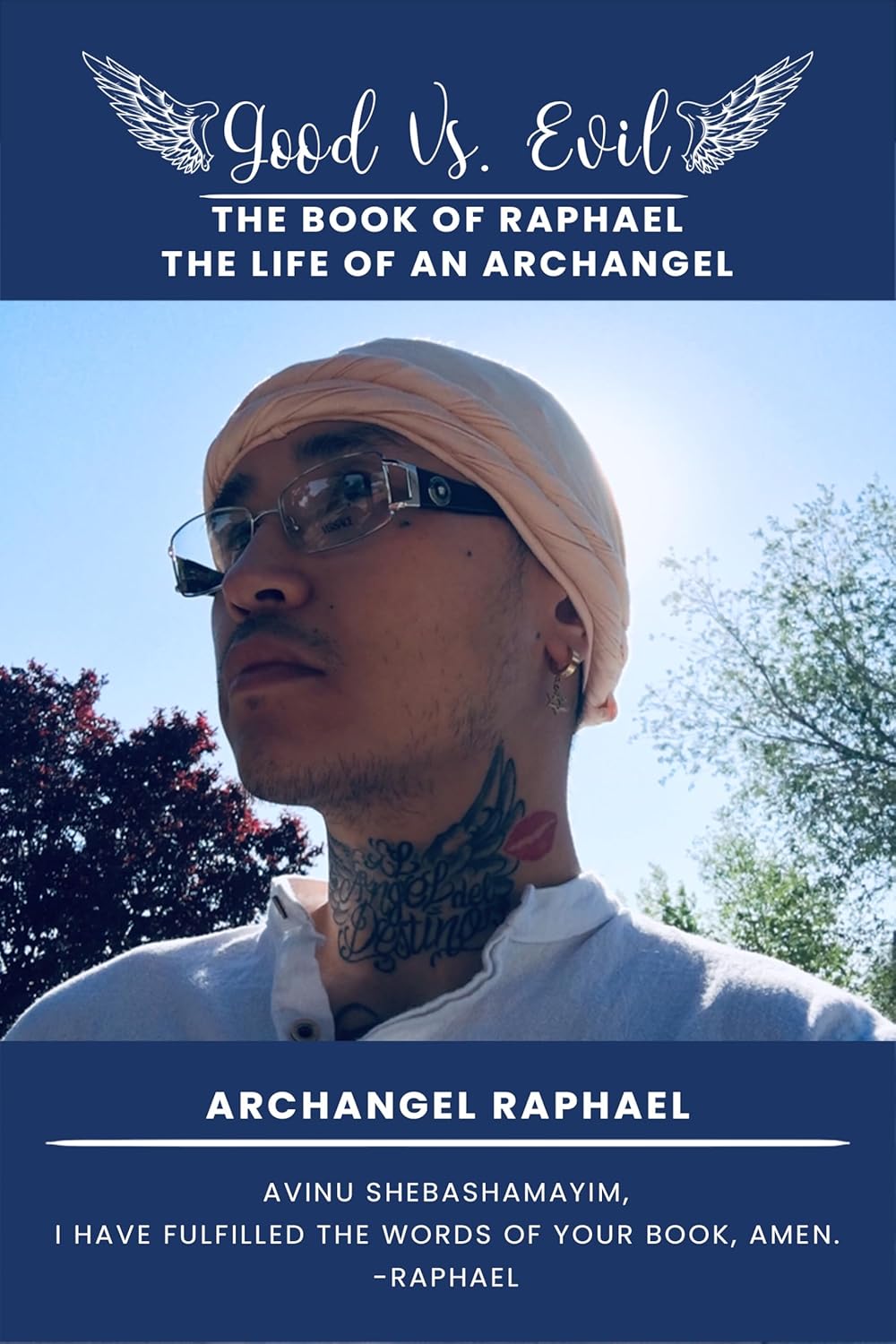




In every generation, a story emerges that challenges the boundaries of faith, survival, and destiny. “Good vs. Evil: The Book of Raphael” is one such narrative, crafted with gripping emotional precision and profound spiritual insight. It is a memoir rooted in real human pain yet elevated by the celestial perspective of Archangel Raphael a being who walks between worlds, enduring the trials of humanity while fighting a divine war invisible to most.
Raphael’s story begins in the heart of immigrant struggle, a place familiar to countless American families searching for stability and identity. Born to Southeast Asian parents who fled hardship in search of a better life, Raphael’s early years are marked not by comfort but by chaos poverty, instability, and a childhood overshadowed by parental conflict. The book confronts the harsh reality of broken households headon, exploring how domestic turmoil shapes a child’s worldview long before they can put words to their pain.
One of the most haunting early moments is the night Raphael learns he “should never have been born.” Those words shattering, cold, unforgettable become the turning point in his young life. The emotional devastation is palpable, and readers feel the rupture that sets Raphael on a lifelong journey to understand his purpose. That moment alone makes this memoir required reading for anyone who has carried generational trauma or struggled to feel worthy of love.
But Raphael’s story does not remain grounded strictly in human suffering. The narrative weaves between the earthly and the divine, showing readers that his journey has always been part of a greater cosmic battle. The battles in heaven brothers turned enemies, angels cast from grace, the fall of the Ophanim, are written with cinematic depth. Raphael recalls the chaos of celestial war as vividly as he recounts moments of violence in prison, allowing readers to understand how spiritual warfare bleeds into the human world.
The memoir moves through adolescence into the turbulent years of adulthood marked by gang influence, incarceration, betrayal, and near death experiences including a brutal stabbing that nearly ends Raphael’s life. Yet, each chapter reveals how faith becomes his anchor, guiding him through adversity not as an escape, but as a source of strength and identity.
What makes this memoir extraordinary is its honesty. Raphael does not paint himself as a victim nor a hero. Instead, he presents himself as both deeply flawed and divinely purposed. His battles internal and external mirror the universal conflict between light and darkness. Readers are reminded that survival requires more than strength; it demands transformation.
For U.S. readers navigating their own challenges, Raphael’s story is a testament to resilience. His life echoes themes familiar to American society: the immigrant experience, cultural identity, systemic injustice, and the pursuit of redemption. Readers who have experienced trauma, incarceration, or spiritual struggle will feel deeply seen in these pages.
“Good vs. Evil: The Book of Raphael” is more than a memoir it is a bridge between worlds, blending the supernatural with the painfully human. It challenges us to confront the darkness within ourselves and inspires us to reclaim the light that trauma tries to extinguish.
For those seeking a powerful narrative of faith, survival, and transformation, this book is essential.
Read the full journey on Amazon KDP: https://www.amazon.com/dp/B0F1W5H6K3
Rising From Darkness: The Relentless Journey of Archangel Raphael
A gripping memoir of trauma, faith, and redemption as Archangel Raphael’s life unfolds between human suffering and a cosmic battle of good and evil.