






It hits you when you read the details – two of the planet’s highest mountains, tackled one after the other in the same trip. Everest at 8,848 metres and Lhotse at 8,516 metres sit in the same Himalayan massif. From the Nepal side most climbers follow the South Col route. You push through the messy Khumbu Icefall, cross the wide Western Cwm, then climb the steep Lhotse Face where fixed ropes are the only thing keeping you steady. Reach the South Col around 7,900 metres and you’re basically at a junction. One way leads along the summit ridge to Everest. Straight ahead is Lhotse’s final wall. Doing both without going all the way down? That’s the part that breaks people. The air is so thin your body feels heavy, recovery is slow, and the smallest storm can end the whole thing.
The connection between these peaks started decades ago. In 1956 the Swiss expedition finished the second ascent of Everest and then put Fritz Luchsinger and Ernst Reiss on top of Lhotse on May 18. They weren’t racing to link them in hours like climbers do now, but they showed the route could work for both.
Years later, when commercial teams got better at logistics and Sherpas started laying more ropes, people began trying both peaks in one season. The really fast back-to-back attempts came later. In 2018 Mexican climber José Luis Sánchez Fernández became the first Latin American to finish both in under 24 hours. It was a quiet milestone that got noticed in the region.
Things have moved fast since then. In May 2024 Polish mountaineer Piotr Jerzy Krzyżowski did something that still gets talked about. He reached Lhotse at 2:38 p.m. on the 21st without using any supplemental oxygen. He dropped to the South Col, grabbed a short rest, and then stood on Everest at 2:00 p.m. on the 23rd. The gap between summits was 1 day, 23 hours and 22 minutes. Early in 2026 Guinness officially certified it as the fastest Lhotse-then-Everest link without bottled oxygen. It beat the old record by nearly five days. Pure alpine style, no big support on the upper sections.
That same 2024 season Indian climber Satyadeep Gupta wrote his own page in the books. He became the first person ever to summit both Everest and Lhotse twice in one year. He also managed the traverse from Everest to Lhotse in 11 hours and 15 minutes – the first Indian to do it that quick.

Even guided climbers are pushing the combo now. In May 2025 Canadian Jocelyn Cayer and her Nepali guide Ashish summited Everest on the 18th and then stood on Lhotse within 24 hours. They called it a Double Crown. Only a few teams pull that off even with full support.
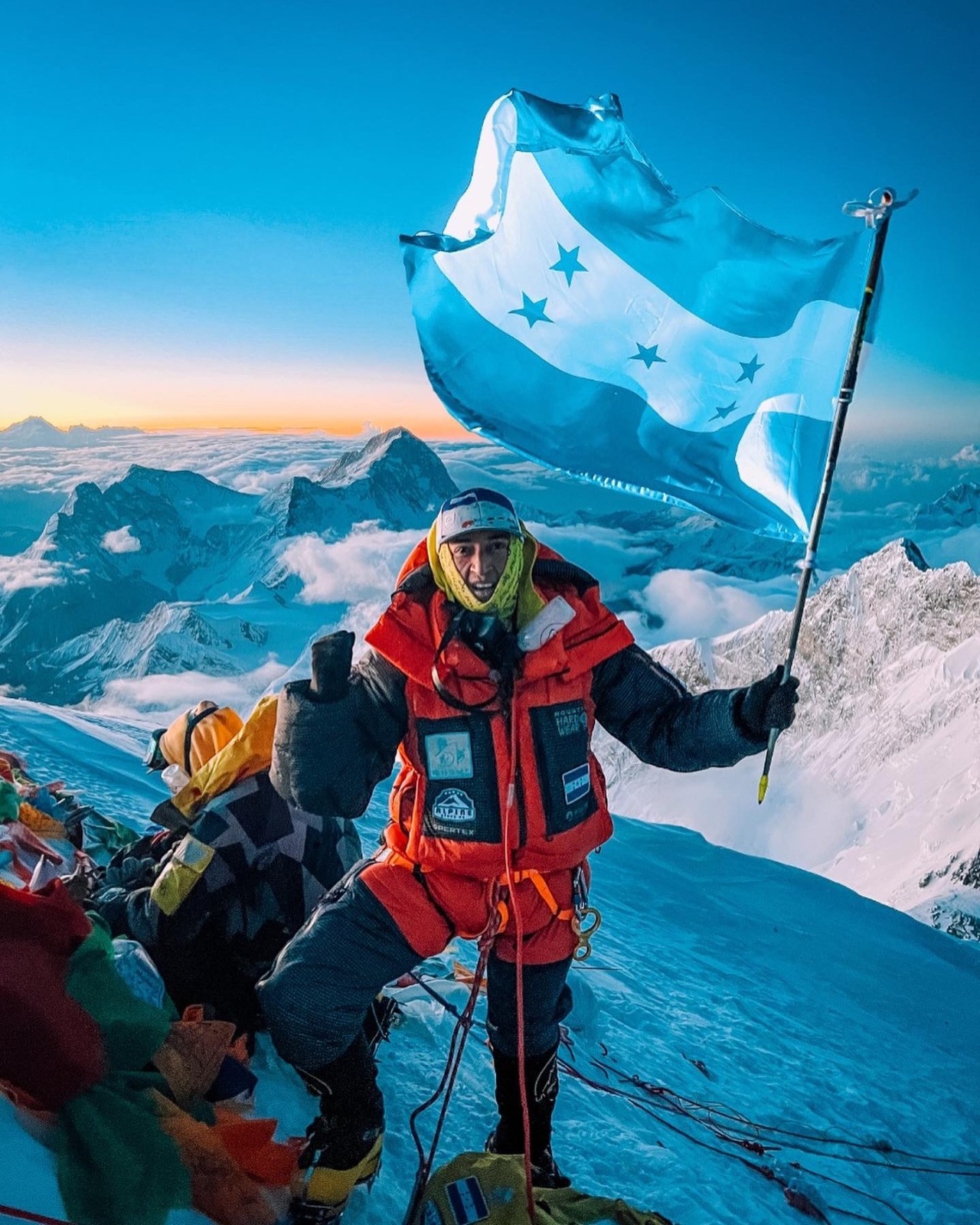
Back in 2022 Honduran climber Ronald Quintero added his name to the list. On May 12 he reached Everest around 4:30 a.m. local time. He came back down to the South Col, rested as much as the altitude allows, and the next morning – May 13 at about 7:15 a.m. – he stood on Lhotse. The whole double took less than 26 hours. That made him the first Honduran on Everest and the first Central American to complete both peaks in one expedition. One report called it the “impossible journey.”
Up there oxygen is roughly a third of what you breathe at sea level. Nights get brutally cold. Weather windows close fast. Even with extra oxygen and the ropes fixed every season, most Everest summiteers don’t even try Lhotse afterward. The body simply says no. You need weeks of acclimatisation, careful pacing, and some luck.
From the Swiss team in the 1950s proving it could be done, through today’s oxygen-free speed records and these regional firsts, the Everest-Lhotse double keeps showing up. It’s rarely just about the fastest time. More often it’s about what careful planning and real determination can still achieve in one of the toughest places on the planet.